Punjab’s public transport system is undergoing a major transformation as the provincial government pushes forward with its ambitious Vision 2030 plan. The latest phase of the electric bus project has officially started, bringing cleaner, quieter, and more affordable travel options to millions of people across the province.
After successful operations in Lahore, the government has now expanded the project to several new districts in Central and South Punjab. With hundreds of modern electric buses arriving this month, commuters can expect better travel facilities, improved air quality, and safer transportation services in the coming weeks.
Read Also: Germany Scholarships Without IELTS 2026: How to Study Free in Europe
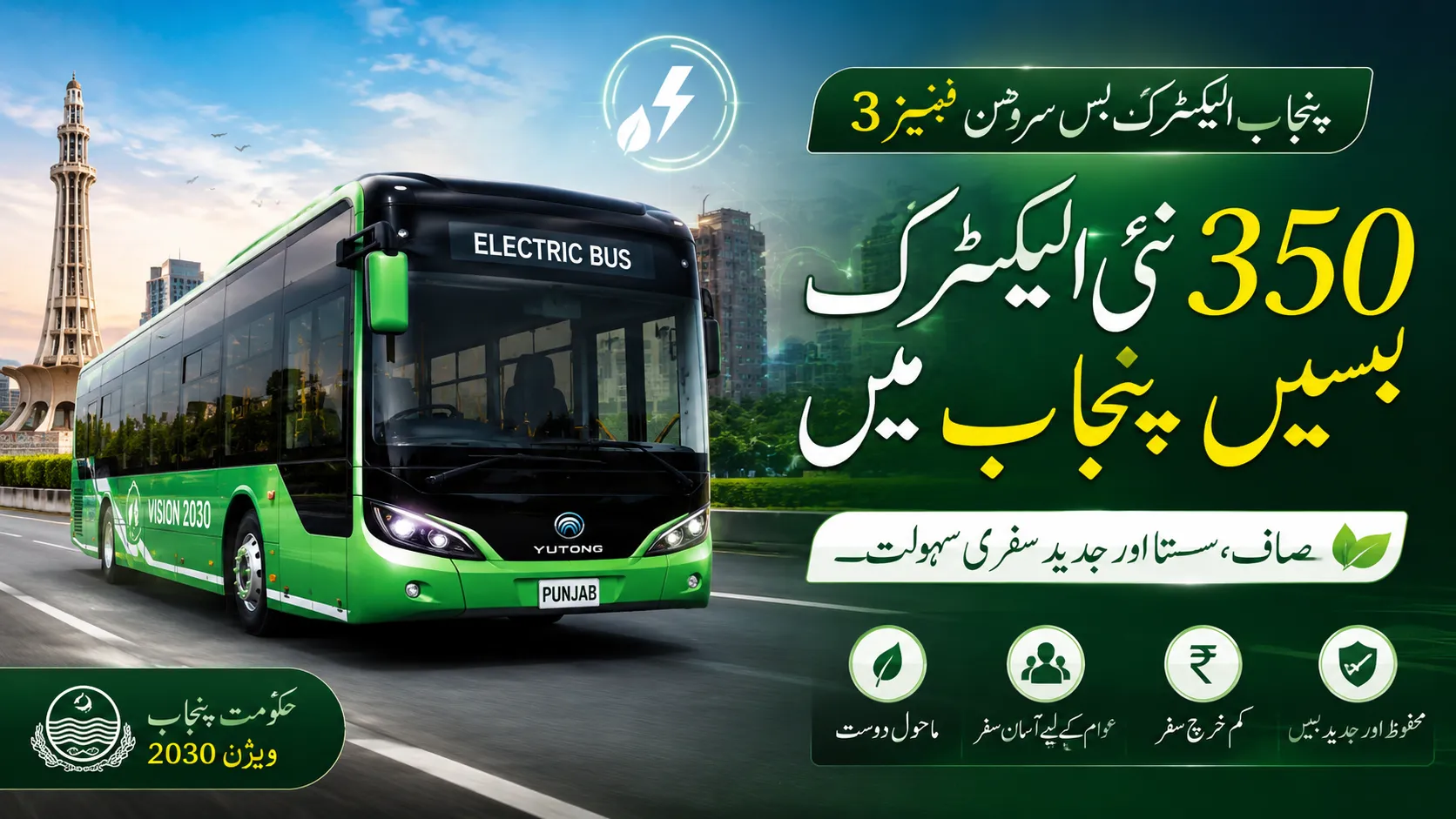
350 New Electric Buses Arrive in Punjab
The Punjab government has confirmed the arrival of 350 new electric buses in mid-May 2026. Earlier this year, an initial fleet of 100 buses had already started operations. With this latest shipment, the province is moving closer to its target of 1,500 electric buses under the Vision 2030 transport strategy.
The new buses are part of Punjab’s larger effort to reduce pollution caused by diesel-powered vehicles and modernize public transportation infrastructure.
Quick Overview of Punjab Electric Bus Phase 3
| Feature | Details |
|---|---|
| Project Name | Punjab Electric Bus Project Phase 3 |
| Total New Buses | 350 |
| Future Target | 1,500 Electric Vehicles |
| Current Rollout | 10 Districts |
| Bus Type | Yutong Electric Buses |
| Range Per Charge | 200–250 KM |
| Main Goal | Clean & Affordable Transport |
Cities Included in Phase 3 Rollout
The third phase focuses on expanding modern transport services beyond major metropolitan areas. The following districts are included in the latest expansion:
- Attock
- Bhakkar
- Hafizabad
- Chiniot
- Sialkot
- Okara
- Khanewal
- Layyah
- Khushab
- Mandi Bahauddin
This expansion is especially important for residents of smaller urban centers who have long faced limited and outdated public transport facilities.
Read Also: PEERA Punjab Recruitment 2026 Latest News for EO and IO Posts Expected Very Soon
Why Electric Buses Matter for Punjab
The shift toward electric transport is not only about technology. It directly impacts daily commuters, students, workers, and families struggling with rising transportation costs and environmental problems.
1. Lower Travel Costs
One of the biggest advantages of electric buses is stable operational costs. Since electric vehicles depend less on imported fuel, the government can maintain more affordable and subsidized fares for passengers.
This is expected to benefit thousands of daily commuters facing high inflation and increasing fuel prices.
2. Comfortable and Quiet Travel
Traditional diesel buses are often noisy and uncomfortable. In comparison, electric buses provide:
- Smooth rides
- Less vibration
- Reduced engine noise
- Better passenger comfort
This creates a more peaceful travel experience, especially during long city routes.
3. Improved Passenger Safety
The newly introduced electric buses include several modern safety features such as:
- Real-time tracking systems
- Low-floor accessibility
- Dedicated seating for women
- Improved lighting systems
- Wheelchair-friendly entry points
These upgrades are designed to provide safer and more respectful travel for everyone.
Read Also: Readinfos Jobs 2026 Apply Online – Complete Guide for Latest Opportunities in Pakistan
Punjab’s Fight Against Smog and Pollution
Air pollution remains one of the biggest health challenges in Pakistan, particularly during winter smog seasons in Punjab. Old diesel vehicles contribute heavily to harmful emissions and poor air quality.
By introducing 100% electric public buses, the government aims to reduce:
- Carbon emissions
- Smoke pollution
- Noise pollution
- Fuel dependency
The project is expected to create cleaner urban transport corridors across the province.
Charging Stations and Maintenance System
To support the growing electric fleet, the Punjab Transport & Masstransit Department is also establishing dedicated charging stations in different divisions.
These facilities include:
| Infrastructure Feature | Purpose |
|---|---|
| Rapid Charging Systems | Faster bus charging |
| Dedicated EV Depots | Bus parking & maintenance |
| Technical Support Teams | Quick repair services |
| Route Monitoring Systems | Efficient operations |
The rapid-charging technology will help buses return to service quickly during busy travel hours.
Vision 2030: What Happens Next?
The Punjab government plans to continue expanding electric transport services across the province. According to official statements, the long-term goal is to introduce electric buses in all 148 tehsils of Punjab.
The broader Vision 2030 initiative also includes:
- Electric taxi programs
- E-bike schemes
- Green transportation policies
- Carbon reduction targets
This strategy aims to create a more sustainable and modern public transport network for future generations.
Read Also: CM Punjab Launches E-Learn She Earn Program 2026 – Free Training & Monthly Stipend for Women
Benefits for Students and Office Workers
The new electric buses are expected to become especially popular among:
- Students
- Daily wage workers
- Government employees
- Office staff
- Female commuters
Affordable fares and improved safety measures may encourage more people to use public transport instead of private vehicles.
Frequently Asked Questions
When will electric buses start operating in these cities?
Test operations are expected to begin within the next few weeks as buses are assigned to routes and charging facilities become fully operational.
Will there be separate seating for women?
Yes, dedicated seating areas for women and families will remain available on all government-operated electric buses.
Which company manufactured these buses?
The current fleet consists of modern Yutong electric buses imported from China as part of Punjab’s green transport initiative.
How can commuters check routes and schedules?
Route maps and timing details will be released through official transport authorities and integrated into public transit mobile applications.
How far can an electric bus travel on one charge?
These buses can typically cover 200 to 250 kilometers on a single charge before returning to charging stations.
Final Thoughts
Punjab’s Electric Bus Phase 3 rollout marks a major step toward cleaner, smarter, and more affordable public transportation. By expanding modern electric bus services into smaller cities and districts, the government is attempting to improve daily life for millions of commuters while also addressing serious environmental challenges.
If the Vision 2030 targets are achieved successfully, Punjab could become one of the leading regions in South Asia for sustainable public transport development.