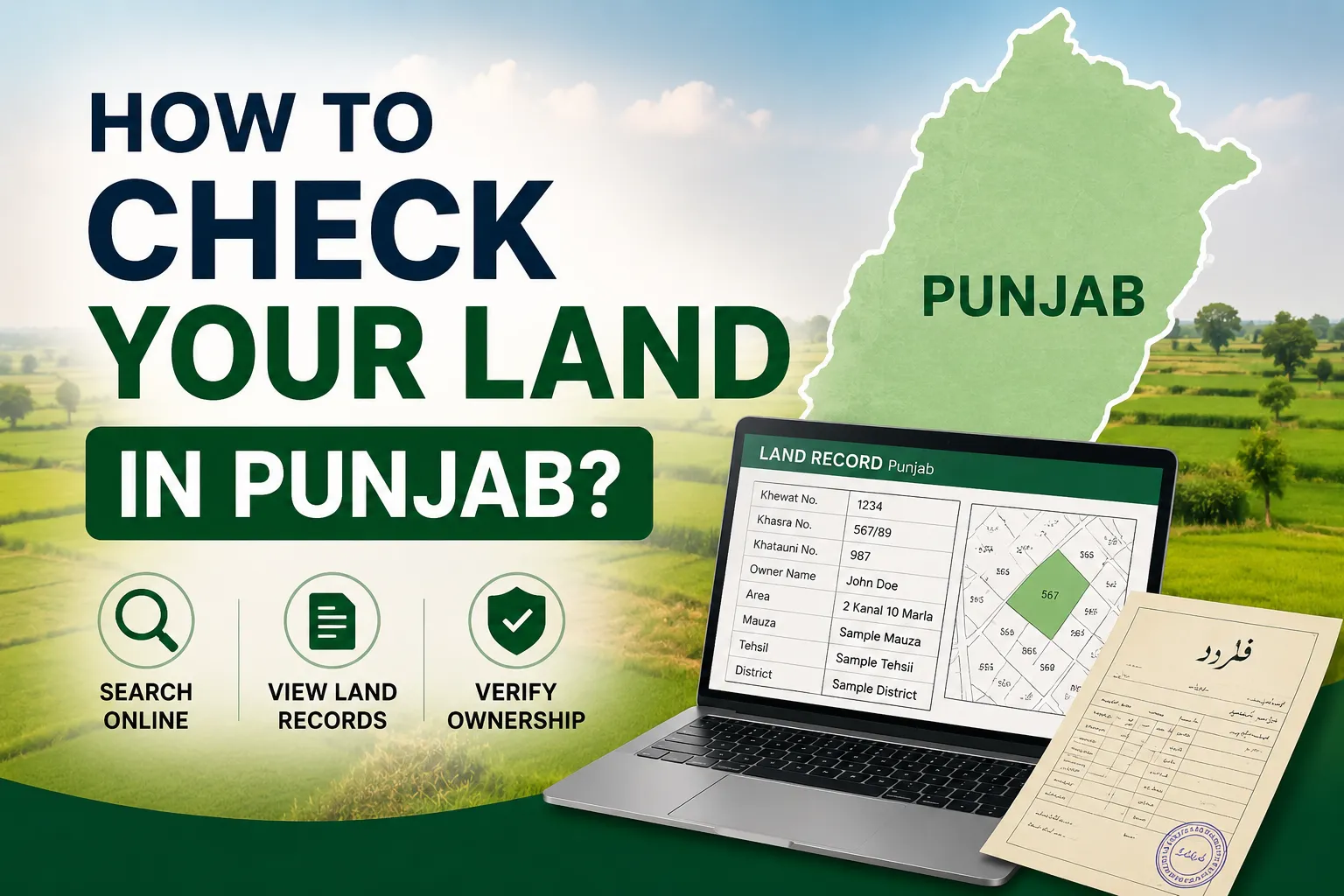
If you own land in Punjab, Pakistan, you may want to check important details such as land ownership, Khewat number, Khasra number, Khatauni details, area, and the names of recorded owners. Fortunately, much of this information can be checked through Punjab’s digital land-record system.
This guide explains the basic process of checking your land records and what to do if you cannot find your property online.
What Information Do You Need?
Before checking your land record, try to collect as much of the following information as possible:
- District
- Tehsil
- Mauza (village)
- Owner’s name
- CNIC number, where applicable
- Khewat number
- Khasra number
- Khatauni number
You do not necessarily need all of this information. Having the district, tehsil, mauza, and owner’s name can often help you start your search.
How to Check Land Records Online in Punjab
Punjab has digitized land records through the Punjab Land Records Authority (PLRA). The online system and Arazi Record Centers can help landowners access official land-record information.
Step 1: Identify Your District and Tehsil
First, determine where the land is located. Punjab land records are organized according to administrative areas, so you will generally need to know the:
District → Tehsil → Mauza
For example, if your property is located in Faisalabad District, you will need to identify the relevant tehsil and village/mauza.
Step 2: Search for Your Property Record
Use the official Punjab land-record services where available. Depending on the service and record, you may be able to search using information such as the owner’s name or other property identifiers.
The record may provide details including:
- Owner’s name
- Share in the property
- Khewat number
- Khasra number
- Khatauni number
- Land area
- Nature of ownership
Make sure the information matches your documents.
Step 3: Get a Fard
A Fard is an official document containing information from the land record. It can be useful when you need documented proof of ownership or property information.
If you require an official document rather than simply checking information online, visit an Arazi Record Center (ARC) or use the applicable official PLRA service.
You may be required to provide identification and property details before the record is issued.
What Are Khewat, Khasra and Khatauni Numbers?
These terms can be confusing if you are checking land records for the first time.
Khewat Number: Generally identifies the ownership account in the land record.
Khasra Number: Identifies a particular parcel or survey number of land.
Khatauni Number: Relates to the cultivation/tenancy or holding record associated with the land.
The exact information shown can vary according to the type of record and property.
What If Your Land Does Not Appear Online?
Don’t panic if you cannot find your property immediately.
Some older or incomplete records may require verification through the relevant Arazi Record Center. There may also be differences in spelling, ownership names, village names, or property numbers between old documents and digitized records.
Take your original property documents and identification with you when requesting assistance.
How to Verify That the Land Really Belongs to You
Checking an online record is a useful first step, but for an important property transaction you should carry out proper verification.
Compare the land record with:
- Your registered sale deed
- Previous ownership documents
- Fard
- Khewat and Khasra numbers
- Mutation (Intiqal) records
- CNIC details
- The physical location and boundaries of the property
If you are buying land, do not rely solely on a seller’s photocopies or screenshots. Obtain the relevant official records and consider consulting a qualified property lawyer or land-record professional before completing the transaction.
What Is Mutation (Intiqal)?
When ownership changes because of a sale, inheritance, gift, or another legal transaction, the change may be recorded through mutation (Intiqal).
If you recently purchased or inherited land, check whether the ownership change has been properly entered into the land record. An old sale deed alone does not necessarily mean that the current land record has been updated.
Visit an Arazi Record Center if You Need Help
If you are unable to check the property online, or if the information appears incorrect, an Arazi Record Center can help you obtain and verify the relevant land-record information.
Take your CNIC and any documents you have relating to the property, such as:
- Sale deed
- Previous Fard
- Registry
- Mutation documents
- Khasra or Khewat details
Final Thoughts
Checking your land record in Punjab is easier than it used to be because many land records have been digitized. Start by identifying your district, tehsil, and mauza, then use the official Punjab land-record services to look for your property.
For legal, inheritance, or property-sale matters, however, treat an online search as a starting point rather than the final verification. Always obtain the appropriate official record and verify ownership before making a significant property decision.