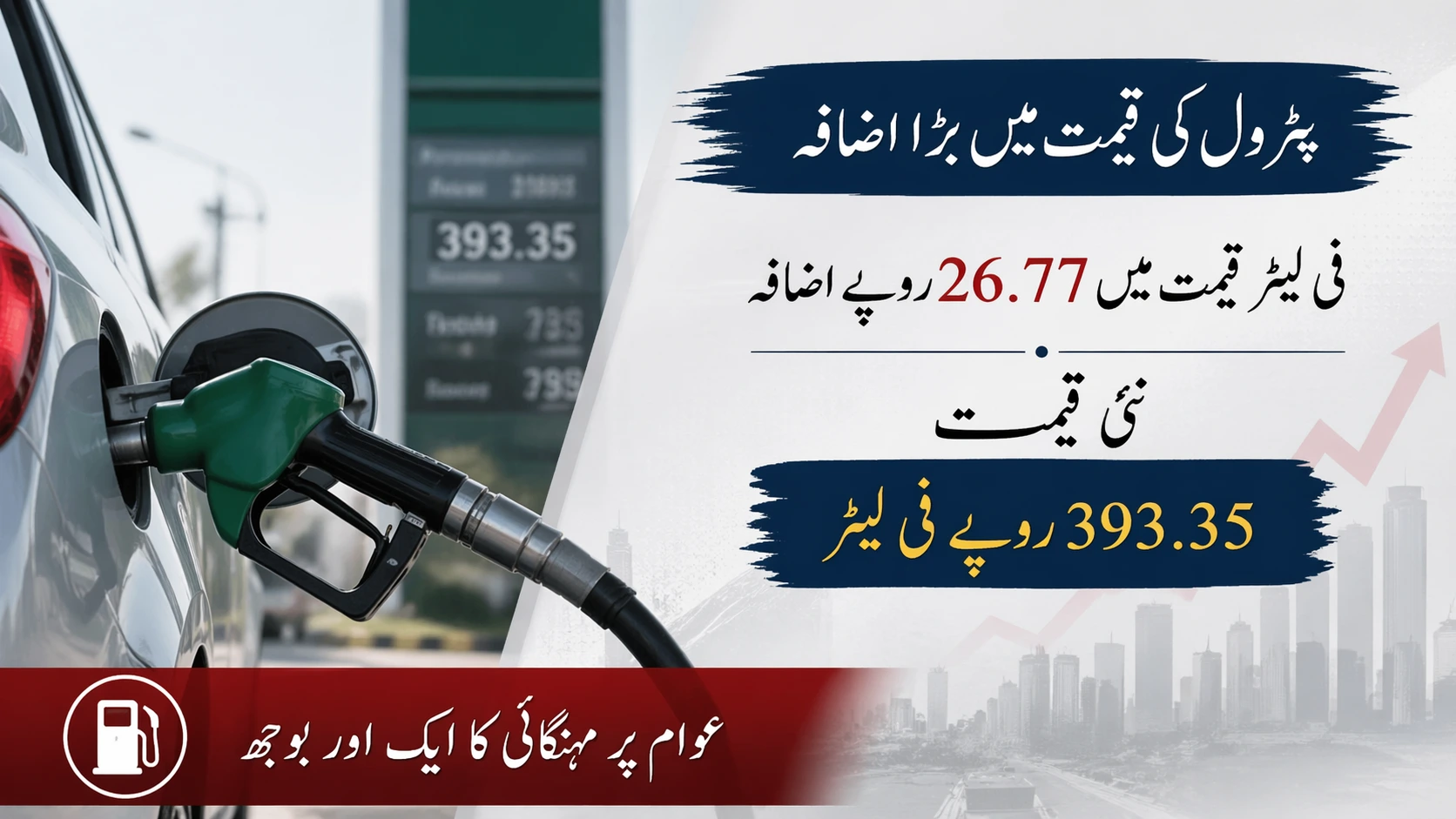
The government has announced a major increase in petrol prices, bringing fresh concern for citizens already dealing with rising living costs. The price of petrol has been increased by Rs 26.77 per litre, pushing the new rate to Rs 393.35 per litre. This sharp hike is expected to impact transportation, daily expenses, and overall inflation across the country.
Read Also: ReadInfos Free Laptop 2026 – Complete Guide for Students
Key Highlights
-
Petrol price increase: Rs 26.77 per litre
-
New petrol price: Rs 393.35 per litre
-
Effective date: Immediate implementation
-
Impact: Transport fares, goods prices, and inflation likely to rise
Latest Petrol Price Update
| Fuel Type | Previous Price | Increase | New Price |
|---|---|---|---|
| Petrol | Rs 366.58 | Rs 26.77 | Rs 393.35 |
This increase marks one of the highest petrol price levels in recent months, putting additional pressure on households and businesses.
Why Petrol Prices Are Increasing
Several key factors are contributing to this significant price hike:
-
Global oil price fluctuations in the international market
-
Currency depreciation, making imports more expensive
-
Government taxes and levies on petroleum products
-
Economic adjustments under financial policies
These elements combined have resulted in a sharp rise in fuel costs, directly affecting local pricing.
Impact on Daily Life
The increase in petrol prices will have a direct and indirect impact on everyday life:
Transportation Costs
Public and private transport fares are expected to rise immediately, increasing the cost of commuting.
Inflation Pressure
Higher fuel prices often lead to increased prices of goods and services, especially food and essentials.
Business Expenses
Businesses relying on transportation and logistics may face higher operational costs, which could be passed on to consumers.
Read Also: FPSC Roll Number Slips 2026 GR Exam Phase-I Uploaded Download PDF [Link Out]
Public Reaction
Many citizens have expressed concern over the continuous rise in fuel prices. With petrol now nearing Rs 400 per litre, affordability is becoming a major issue for middle- and lower-income groups.
What to Expect Next
Experts suggest that petrol prices may remain volatile depending on:
-
International oil market trends
-
Government economic policies
-
Exchange rate stability
Consumers are advised to plan expenses carefully and stay updated with official announcements.
Final Thoughts
The latest increase of Rs 26.77 per litre, bringing petrol to Rs 393.35, is a significant development with wide-reaching consequences. It highlights the need for economic stability and effective policy measures to reduce the burden on the public.
Staying informed and adapting to these changes will be crucial in managing the financial impact in the coming weeks.